How to Know Which Farmers Markets Are Worth Your Time (And Which Ones Aren't)
A data-driven framework for deciding which farmers markets are worth your time, and which ones to walk away from.

Andrew Lund
Co-founder of Misto
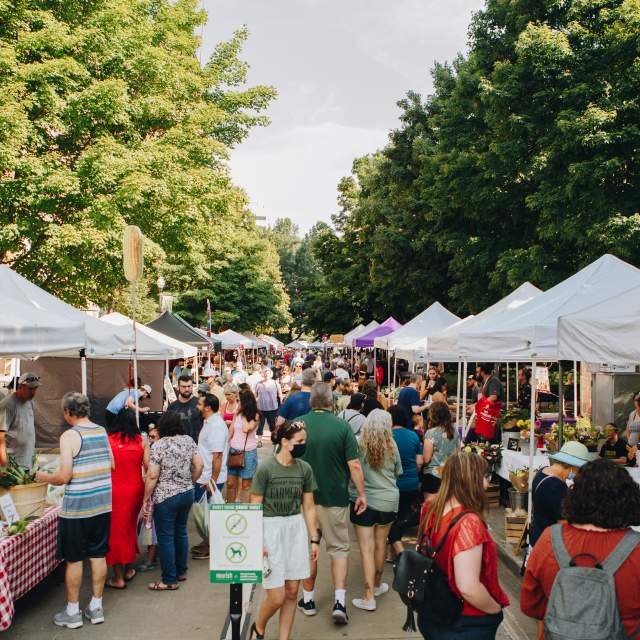
Every vendor has a story about a market that wasn’t worth it.
The three-hour drive for $200 in sales. The market with a $150 booth fee and 12 customers. The event that should have been great — perfect weather, big crowd — but somehow still didn’t cover your costs.
Here’s the uncomfortable truth: most vendors are guessing when they decide which markets to do. They go by gut feel, reputation, or simply because someone told them it was good. They don’t have a system.
After running 4 different farmers market businesses and talking to hundreds of vendors, I’ve found that the vendors who grow fastest aren’t necessarily the ones with the best products. They’re the ones who treat market selection like a data problem.
Here’s the framework I use and what I wish I had known when I started.
Why Market Selection Is Your Most Important Business Decision
Think about it this way: if you show up to the wrong market, no amount of great product, beautiful displays, or competitive pricing will save you. You’re just burning time, energy, inventory, and money.
According to USDA’s most recent farmers market data, there are over 8,600 farmers markets operating in the United States. That’s a lot of options, and a lot of opportunities to pick the wrong one.
The flip side is also true: once you identify your best markets and double down on them, growth compounds. Your regulars start showing up specifically to see you. Organizers give you better spots. Word of mouth spreads within that market’s community.
The math of market selection is stark. Let’s say you have 50 Saturday market days available in a year:
Bad market selection: Average $300/day = $15,000 in annual revenue
Good market selection: Average $700/day = $35,000 in annual revenue
Same number of days. Same product. Completely different outcome.
Step 1: Understand the True Cost of a Market Day
Before you can evaluate whether a market is “worth it,” you need to know what it actually costs you to show up.
Most vendors only count the booth fee. The real cost is much higher.
Calculate your full market day cost:
Booth fee: What the market charges
Travel: Gas + vehicle wear (use the IRS standard mileage rate of $0.67/mile as a baseline)
Supplies and packaging: What you use/consume each market
Food/product cost: Cost of goods sold (typically 25-40% of revenue)
Your time: Drive time + setup + market hours + breakdown + admin after. Value your time at what you’d earn doing something else.
Opportunity cost: What other market could you be at instead?
Example calculation for a food truck:
Cost | Amount |
|---|---|
Booth fee | $75 |
Gas (30-mile round trip) | $22 |
Supplies | $15 |
Food cost (at 35% of $400 revenue) | $140 |
Your time (6 hours at $25/hr) | $150 |
Total cost | $402 |
Revenue | $400 |
Net profit | -$2 |
That market looked fine on the surface ($400 in sales!) but actually lost money when you account for your time.
Your minimum revenue target formula: (Booth fee + travel + supplies) ÷ 0.65 + (hours × your hourly rate) = break-even revenue
If you can’t realistically hit that number based on what you know about the market, it’s not worth going.
Step 2: Research Before You Commit
Never sign up for a market without doing your homework first. Here’s what to research:
Check the market’s foot traffic
Visit as a customer first. Before committing as a vendor, go to the market and spend an hour there. Count customers roughly, observe how busy vendors are, watch how people shop. This is the most valuable research you can do and it takes 90 minutes.
Check their social media. A market’s Instagram and Facebook presence tells you a lot. How many followers do they have? Are customers tagging themselves there? Are there recent photos with real crowds? A market with 200 Instagram followers and no customer photos is a red flag.
Look at Google reviews. Search “[Market Name] farmers market reviews” and read what customers say. Pay attention to: parking, variety of vendors, how crowded it gets, and whether it’s improving or declining.
Ask other vendors. The most reliable intelligence comes from vendors who’ve been there. Find vendors in Facebook groups or at other markets who have worked that event. Ask directly: “Was it worth the booth fee? What did you sell? Would you go back?”
Understand the vendor mix
A market’s vendor mix dramatically affects your success. You want:
Complementary vendors: Markets where your product fits naturally with what else is there. A food truck does better at markets with lots of produce and artisan goods (customers are already buying). A jewelry vendor does better at markets with lots of shoppers vs. quick-stop customers.
Not too many direct competitors: If there are already four food trucks and you’d be the fifth, your slice of the pie is smaller. Unless the market is large enough to support it.
Anchor vendors: Strong, established vendors who draw regular customers create foot traffic that benefits everyone. A market with one or two well-known, beloved regulars is often more valuable than a larger market without them.
Evaluate the organizer
The market organizer’s quality affects everything: booth placement, vendor communication, marketing, and how problems get resolved.
Green flags:
Active social media promoting vendors
Clear communication and contracts
Responsive to questions before you sign up
Long-running market with stable vendor base
Good reviews from vendors (search vendor Facebook groups)
Red flags:
Vague about foot traffic when asked
Slow to respond to pre-market questions
High vendor turnover (check if the same vendors return year after year)
No marketing budget or social media presence
New market without established draw
The Farmers Market Coalition has excellent resources on what distinguishes well-run markets from poorly managed ones.
Step 3: Score Your First Visit
Your first time at any new market is a data collection exercise as much as a sales day. Don’t just set up and hope, go in with a plan to learn.
Track during the event:
Foot traffic: Keep a rough hourly count (or estimate: slow/medium/busy)
Customer behavior: Are people stopping and buying, or walking past?
Peak hours: When was it busiest? When did it get slow?
Competitor sales: How were vendors with similar products doing?
Your conversion rate: How many people stopped at your booth vs. how many bought?
Note the context:
Weather (temperature, conditions)
Time of year / season
Any special events drawing extra traffic
Your booth placement (corner? middle? near entrance?)
Parking situation
After the event, calculate:
Revenue
Items sold
Revenue per hour
Revenue after costs (using the formula above)
Would you go back? Why or why not?
Step 4: Build Your Market Scorecard
After a few events, you’ll have enough data to build a simple scorecard. Here’s the one I use:
Create a spreadsheet with these columns:
Market Name | Date | Weather | Booth Fee | Revenue | Net Profit | Hours | $/Hour | Go Back? | Notes |
|---|---|---|---|---|---|---|---|---|---|
Saturday Market | 3/15 | Sunny 65° | $75 | $680 | $312 | 7 | $44 | ✅ Yes | Solid regulars |
Wednesday Market | 3/19 | Cloudy | $50 | $190 | $28 | 5 | $5 | ❌ No | Poor foot traffic |
Spring Festival | 3/22 | Sunny | $150 | $1,100 | $580 | 8 | $72 | ✅ Yes | Best event of year |
After 10-15 markets, patterns become obvious. You’ll know:
Which markets consistently outperform
How weather affects each specific market
Which seasons are strongest for each location
Which events are worth the higher booth fees
This data transforms guesswork into strategy.
A good POS system makes this much easier. Misto is built specifically for market vendors and tracks your sales by event automatically, so you’re not manually logging everything in a spreadsheet after a long market day.
Step 5: The Decision Framework
Once you have data, use this framework to decide whether to continue at a market:
Markets worth keeping if they hit these thresholds:
Revenue per hour: At least $50-75/hour net after all costs (adjust based on your personal hourly rate target)
Consistent traffic: Not just one great day — does it perform reliably across different weather and seasons?
Growth trajectory: Are sales improving as you become a regular and build your customer base there?
Customer quality: Do people buy or just browse? Are they repeat customers?
Markets to cut or put on probation:
Below $30/hour net: Unless it’s a strategic market (building relationships, testing new products), it’s probably not worth your Saturday.
One-off success: A great day because of an unusual event or perfect weather, but consistently mediocre otherwise.
High vendor conflict: Too much direct competition driving down average sales.
Poor organizer relationship: If the organizer doesn’t support vendors, it won’t get better.
Step 6: Build Customer Relationships That Follow You
Here’s the multiplier effect that most vendors miss: your best customers will follow you to other markets if you stay in touch with them.
A customer who buys from you at the Saturday market and gets a text saying “Hey! We’ll be at the Wednesday downtown market this week!” is far more valuable than a random walk-by customer. They’re already sold on your product — they just need to know where you are.
Build your customer contact list at every market:
Set up a simple sign: “Text JOIN to [number] for our market schedule and exclusive deals”
Over a season of consistent markets, even 100 engaged customers on your text list can meaningfully boost your revenue at every market you do.
This is something Misto has built directly into the POS, you can collect customer contacts and send texts from a verified business number, all from the same system you use to take payments. No separate tools, no extra monthly subscriptions.
According to SimpleTexting’s research, SMS open rates average 98% compared to 20% for email, making text messaging the most effective channel for reaching your customers when you have news to share.
Red Flags: Markets You Should Probably Avoid
Based on hard experience and conversations with hundreds of vendors, here are the situations that rarely work out:
Brand new markets without established draw. A new market needs 12-18 months to build a loyal customer base. Being an early vendor can pay off long-term, but don’t count on it for revenue in the first season.
Markets where your category is saturated. If there are already 5 food trucks and the market only has 30 vendors total, you’re fighting for a small slice.
High booth fees at unproven events. $200+ booth fees need to be justified by proven foot traffic. Don’t let optimistic projections from an organizer be your only data point.
Markets that market poorly. If the organizer isn’t actively promoting the market on social media, email, and local press, fewer people will come. Check their Facebook event pages for engagement.
Markets more than 45 minutes away that aren’t exceptional. The time and fuel cost of a long commute needs to be offset by substantially higher revenue. Most of the time, a closer mediocre market and a closer great market is better than a faraway great market.
The Markets That Are Almost Always Worth It
On the flip side, some categories of markets are reliably strong performers:
Established markets with 5+ years of history. They’ve survived because they work. The customer base is loyal and the organizer knows what they’re doing.
Festival events with external draw. A farmers market attached to a music festival, art fair, or community event gets foot traffic from the event itself. These are often your highest-revenue days.
Markets where you have a relationship with the organizer. Being a known, trusted vendor gets you better placement, early notice of prime spots, and sometimes promotion in the market’s own marketing.
Markets with complementary vendors that drive traffic to you. If you’re a food truck and the market has strong produce, bakery, and artisan vendors — customers who come for those vendors will pass your truck.
Putting It All Together: A 90-Day Market Strategy
Month 1: Research and test
Visit 3-5 potential new markets as a customer
Sign up for 2-3 markets you haven’t tried
Start tracking every market in your scorecard
Month 2: Evaluate and cut
Review your scorecard after 8-10 total market days
Cut the bottom performer
Double down on your top performer (apply for more dates, get better placement)
Month 3: Optimize
You now have enough data to see patterns
Build your ideal weekly/monthly market schedule based on actual revenue data
Start building your customer text list at your best markets to increase repeat business
The Bottom Line
The vendors who struggle are usually doing too many mediocre markets because they haven’t built a system to identify what’s actually working.
The vendors who thrive have a clear picture of which markets make money, which ones are worth the time, and which ones to walk away from without guilt.
Start tracking. The data will tell you everything you need to know.
And if you want a POS that does the event tracking automatically, so you’re not manually logging everything after a long market day. Misto was built for exactly this. It also helps you build the customer text list that turns one-time buyers into regulars who follow you from market to market.
Join the Misto waitlist here →
About the Author Andrew Lund runs Lil Mama’s food truck and is the founder of Misto, a POS system built specifically for farmers market vendors, food trucks, and farm stands. After years of guessing which markets were worth attending, they built a system to track it properly, and eventually built that into their POS.